Birdella INSIGHTS
What It Means for
Creators and IP
20th April, 2026
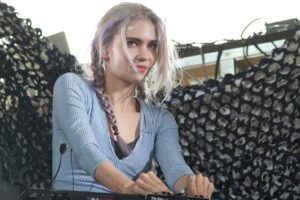
When Grimes announced she was moving to LinkedIn, most people assumed it was a joke. However, it may not be. Last month, a profile purporting to be the electronic musician and AI provocateur appeared on the platform, its first post promoting an appearance at Nvidia’s GPU Technology Conference. Consequently,, the most valuable company in the world, apparently, needs a storyteller.
It is a strange and revealing moment. Not because an artist has ended up on LinkedIn — but because of why.
The answer, in a word, is enshittification. Coined by writer Cory Doctorow, it describes the slow degradation of digital platforms — the way they begin by serving users, then pivot to serving advertisers, then hollow out entirely, leaving behind a wasteland of bots, automated content, and algorithmic noise. Twitter became X and lost its creative community. Similarly, Etsy is overrun with dropshippers. Instagram prioritises Reels over everything else. The open, generative internet that creative communities built their audiences on has been strip-mined and left for dead.
Where Do Creators Go When the Internet Breaks?
The question is not rhetorical — it has real economic consequences. Attention spans are down. Sales are down. Funding is down. Furthermore, the platforms that once connected artists directly with audiences now charge for that privilege, suppress organic reach, and compete with creators by serving up AI-generated content that costs nothing to produce.
LinkedIn, of all places, has become an unlikely refuge — not because it is good (it isn’t), but because it still has a captive, professional audience that reads things. As the article’s author wryly notes, visiting LinkedIn is “a bit like moving in with your boomer grandparents” — the algorithm stockpiles content, the posts are full of AI-generated corporate cadence, and the dominant voices are AI bros congratulating each other on “changing the game for ever.”
And yet — here we are.
The Art-washing Problem
The more troubling dimension of the Grimes story is what her LinkedIn presence actually represents. She is not there as an independent artist. She is there as a storyteller-for-hire, providing cultural credibility to Nvidia’s corporate narrative. This is art-washing — the use of creative talent to soften, humanise, and glamourise the image of technology companies that would otherwise struggle to tell a compelling story about themselves.
It is a well-worn playbook. Big tech says it wants storytellers. What it actually wants are uncritical voices that amplify its own mythology. The artists who understand this — and refuse it — are the ones who signed the 2024 open letter rejecting OpenAI’s invitation to participate in Sora development, calling it “outsourced R&D” with a charitable name attached.
The tension here is not simply between artists and corporations. It is between the kind of storytelling that challenges power and the kind that serves it. That distinction matters enormously in the AI era, where the narratives being built right now will shape public understanding of the technology for years to come.
What This Means for the AI & IP Landscape
For those of us tracking the intersection of AI, intellectual property, and creative culture, the Grimes-LinkedIn-Nvidia story is a useful data point in a much larger picture.
AI is restructuring the creative industries— not just economically, but culturally. The value of authentic human perspective is simultaneously being eroded by AI-generated content and inflated by the hunger of tech companies for the credibility that only genuine human voices can provide. Currently, artists are caught in that contradiction, navigating a landscape where their work is scraped for training data without consent, their platforms are degraded by the very technology being trained on their output, and their only viable path to an audience increasingly runs through the corporate structures responsible for that degradation.
Who Owns the Narrative? The Looming Policy Emergency
This is not a niche creative industries problem. Rather, it is a question about who controls narrative, who owns creative output, and what the internet is actually for. Those questions will be litigated — literally, in courts — for years to come.
Ultimately, the enshittification of the internet is not just a cultural inconvenience.
It is an IP and policy emergency hiding in plain sight.
The Birdella Group provides Strategic Thought Leadership & Tech-Led Intelligence in AI & IP.
Our Thelonious platform delivers AI-powered, human-reviewed intelligence on the legal and policy developments shaping the AI era.